Are Golf Carts Street Legal? LSV Rules Explained (2026)
Whether a golf cart is street legal comes down to one thing: is it a golf cart or a low-speed vehicle (LSV)? Here's the difference, the federal LSV safety requirements, and how to make a cart road legal in 2026.
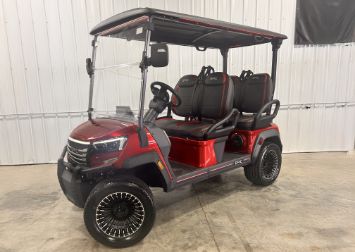
“Are golf carts street legal?” is one of the most common questions dealers hear — and the honest answer is: it depends on whether the vehicle is a golf cart or a low-speed vehicle (LSV). Those are two different things in the eyes of the law, and knowing the difference is the key to putting a cart on a public road legally. Here's the framework for 2026.
The short answer: golf cart vs. low-speed vehicle (LSV)
A standard golf cart is built for the course, a resort, or a private community. It usually tops out around 15–19 mph and, by default, is not street legal on public roads.
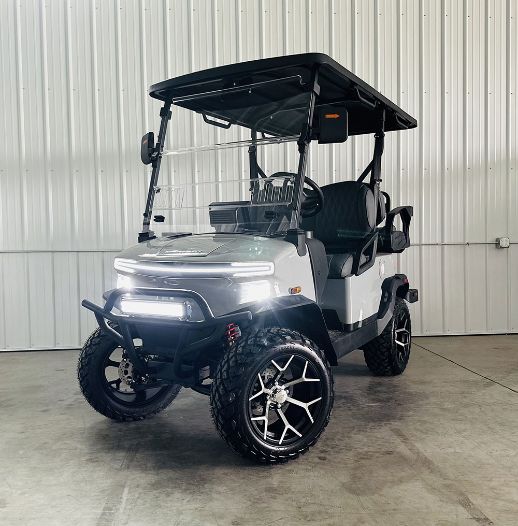
A low-speed vehicle (LSV) — sometimes called a neighborhood electric vehicle (NEV) — is a separate, federally recognized vehicle class that can be titled, registered, insured, and driven on many public roads. A lot of “street-legal golf carts” are really LSVs that look like carts. So the real question usually isn't whether golf carts are allowed — it's whether this cart meets the LSV standard and is registered.
What makes a vehicle a low-speed vehicle (the federal rules)
Federal safety standard FMVSS No. 500 (49 CFR 571.500) defines an LSV as a four-wheeled vehicle with a top speed of more than 20 mph but not more than 25 mph. To qualify, it must be equipped with:
- Headlights, tail lights, and brake lights
- Turn signals and reflectors
- A windshield
- A parking brake
- Rearview mirror(s)
- Seat belts for every seat
- A 17-character Vehicle Identification Number (VIN)
Because an LSV carries a VIN, states can title and register it like any other vehicle — which is what makes it legal to drive on the street.
Are standard golf carts allowed on the road?
By default, a golf cart that doesn't meet the LSV standard isn't legal on public streets. But there's an important exception: many states, counties, and cities pass their own ordinances that permit golf carts on specific low-speed roads — typically streets posted at 25–35 mph, inside designated golf-cart communities, or with a local permit or decal.
This is why the answer to “are golf carts allowed?” is always local. Rules vary widely from one state — and even one town — to the next. Before you drive, check both your state law and your city or county ordinance. We break the differences down in our state-by-state guide to golf cart laws.
How to make a golf cart street legal
If you want a cart you can legally drive on the road, you're generally converting it to LSV spec and registering it. A typical checklist:
- Add the required equipment — DOT-approved headlights, tail/brake lights, turn signals, reflectors, a windshield, mirrors, seat belts, a horn, and a parking brake.
- Confirm the speed — the cart must be capable of 20–25 mph to qualify as an LSV (too slow, or modified to go faster, and it no longer fits the class).
- Get a VIN — factory LSVs already have one; a converted cart may need a state-assigned VIN and inspection.
- Title, register, and insure it — through your state DMV, just like a car.
- Carry a valid driver's license — nearly every jurisdiction requires one to operate a street-legal cart or LSV.
Some carts are sold from the factory as LSVs and are street legal out of the box; others are pure golf carts that would need the full conversion. Knowing which is which before you buy saves a lot of money.
Where can you actually drive a street-legal cart?
Even a properly registered LSV isn't allowed everywhere. As a rule of thumb, LSVs may be driven on roads posted at 35 mph or lower (a few states set the limit at 30 or 45), and they're not allowed on highways or interstates. Crossing a higher-speed road is often permitted even where driving along it isn't. Local golf-cart ordinances may open up additional roads for non-LSV carts. Again: the specifics are set by your state and municipality.
What this means for golf cart dealers
“Is this one street legal?” is one of the first questions a shopper asks — and a confusing answer costs you the sale. Dealers who clearly label each unit as a standard cart or an LSV, and let buyers filter inventory by street-legal / LSV status, convert far better than those who bury it in a description. If you also rent, the same clarity matters for your rental fleet, where liability and local rules are front and center. New to the business? Our guide on how to start a golf cart dealership covers the rest.
Frequently asked questions
Are golf carts street legal?
Not by default. A standard golf cart is not street legal on public roads unless a local ordinance specifically allows it. A cart becomes road legal when it meets the federal low-speed vehicle (LSV) standard and is titled, registered, and insured — or where your city or state permits golf carts on certain low-speed streets.
What is the difference between a golf cart and an LSV?
A golf cart is built for the course or a private community and typically tops out around 15–19 mph with no required road equipment. A low-speed vehicle (LSV) is a federally recognized class with a top speed of 20–25 mph, mandatory safety equipment, and a VIN — which lets it be registered and driven on many public roads.
How fast does a golf cart have to go to be street legal?
To qualify as an LSV, a vehicle must be capable of more than 20 mph but not more than 25 mph. A cart that can't reach that range — or one modified to exceed it — does not meet the federal LSV definition.
Do you need a license and insurance to drive a street-legal golf cart?
In almost every jurisdiction, yes. A street-legal cart or LSV generally must be registered and insured, and the driver must hold a valid driver's license. Requirements vary by state, so confirm with your local DMV.
Can you make any golf cart street legal?
Most carts can be converted to LSV spec by adding the required equipment and registering the vehicle, but it isn't always practical — very slow or heavily lifted carts may not meet the standard cleanly. Factory-built LSVs skip the hassle by arriving street legal.
Powerdash helps golf cart dealers sell smarter — label and filter inventory by street-legal / LSV status, publish local buying guides like this one, and capture every lead in one place. Start a free trial or see pricing.
Related: Cart is street legal — but who can drive it? Read Do you need a license to drive a golf cart? Age & license rules.