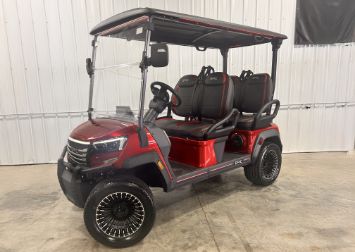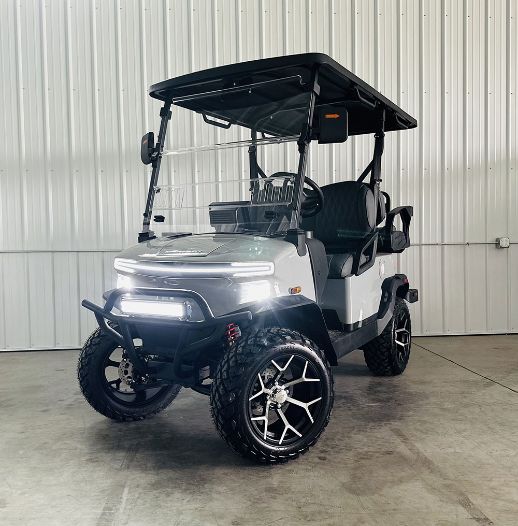
Golf cart laws by state (2026): where you can drive, what you need, who gets fined
All 50 states plus DC. Where golf carts are street-legal in 2026, the LSV / NEV / PTV rules that actually matter, minimum ages, license requirements, and the federal floor every dealer should know.
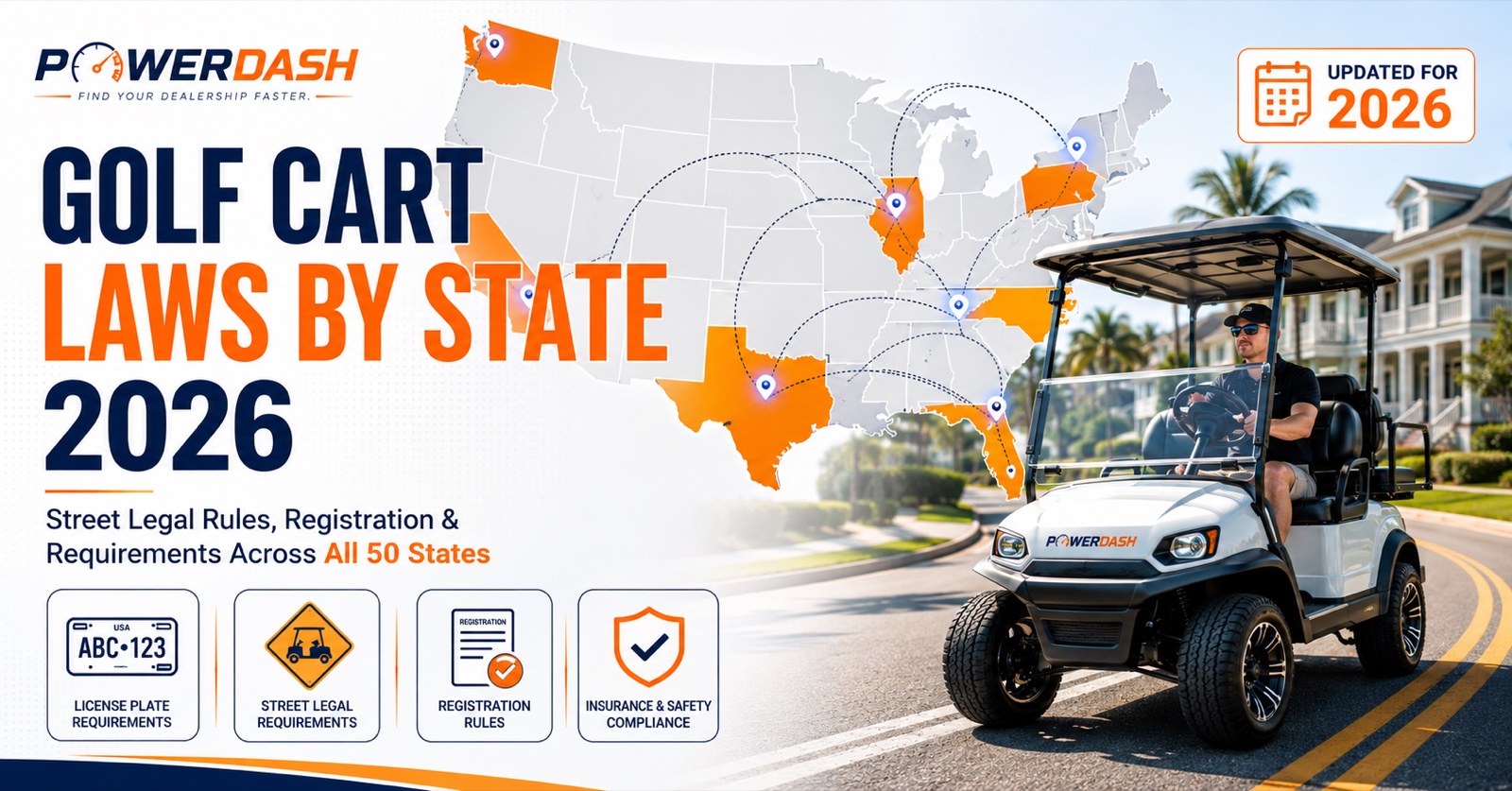
Every week a dealer texts us the same question: "Can my customer legally drive this cart on the street here?" The honest answer in 2026 is "it depends on six things." The honest follow-up is "and they're different in every state."
This is the most current map of US golf cart laws we can put together — state by state, with the rules that actually get drivers ticketed. Verify with your state DMV before you tell a customer it's road-legal. Laws change. Local ordinances stack on top of state law.
The short answer (for the people who'll only read one paragraph)
Golf carts are legal to operate on public roads in roughly 40 US states, but almost always only on roads posted at 25 to 35 mph and only with the right equipment. A street-legal cart usually needs working headlights, brake lights, turn signals, a horn, mirrors, a windshield, and seat belts. Most states require the driver to hold a valid driver's license and be at least 16. The other 10 or so states either prohibit golf carts on public roads outright or leave the call to local municipalities. Read on for the state-by-state breakdown.
Golf cart vs LSV vs NEV vs PTV: the four labels you'll see
Half the confusion in golf cart law is that the same physical vehicle gets called different things in different statutes. Here are the four real legal categories. Get these right and the state list below is much easier to read.
Golf cart (true)
A vehicle designed for use on a golf course. Top speed 15 to 25 mph. Open frame. No federal motor-vehicle classification, no VIN required. Most states do not permit a true golf cart on public roads unless either (a) the local municipality has passed a permitting ordinance, or (b) the cart has been converted to LSV spec.
Low-Speed Vehicle (LSV)
Defined by federal regulation FMVSS 571.500. A four-wheeled motor vehicle with a top speed between 20 and 25 mph and a gross vehicle weight under 3,000 lbs. Must have headlights, brake lights, turn signals, a windshield, mirrors, seat belts, a parking brake, and a 17-character VIN. LSVs are street-legal on roads posted 35 mph or lower in most US states. This is what the industry usually means by "street-legal golf cart."
Neighborhood Electric Vehicle (NEV)
Functionally identical to an LSV. Some state codes (California Vehicle Code §385.5 is the famous one) use "NEV" instead of "LSV" but reference the same federal standard. If your state's statute says NEV, read it as LSV. Same equipment, same speed cap, same road-class limits.
Personal Transportation Vehicle (PTV)
A class Georgia and a handful of other states added below LSV — a slower, lower-equipment cart authorized for PTV-designated paths and roads under a local ordinance. Top speed typically 20 mph. Common in master-planned cart communities (Peachtree City, GA being the canonical example).
The practical takeaway: if you want to legally drive on a public road outside a golf cart community, you almost always need an LSV — not a true golf cart. Dealers should label every unit on the lot accordingly.
The federal baseline: NHTSA and FMVSS 500
Federal law sets the floor. The National Highway Traffic Safety Administration (NHTSA) created the Low-Speed Vehicle class in 1998 under FMVSS 571.500 to give a clear legal home to electric vehicles slower than a regular car but fast enough for low-speed public roads.
What FMVSS 500 requires for an LSV:
- Maximum speed between 20 and 25 mph.
- Headlamps, front and rear turn signals, taillamps, stop lamps.
- Reflex reflectors (front, side, rear).
- Exterior mirror on the driver side plus an interior mirror or second exterior mirror.
- Parking brake.
- Windshield meeting AS-1 or AS-5 glazing standard.
- A 17-character vehicle identification number.
- Type 1 or Type 2 seat belt at every designated seating position.
States can add to those requirements (most do — slow-moving-vehicle triangle, side reflectors at a specific angle, mandatory horn). They cannot legalize an LSV that falls below the federal floor. If you see an unbranded "street-legal cart" missing any of the above, it is not a federally-compliant LSV — selling it as such is a real liability exposure.
The 8 things every state regulates
To read the state list below, here's the same eight-question framework every state's golf cart statute answers.
- What's street-legal: golf cart, LSV only, or both?
- Maximum road speed: usually 25 or 35 mph for the road you're operating on or crossing.
- Required equipment: headlights, signals, mirrors, seat belts, slow-moving-vehicle triangle, horn.
- Driver license: required, or accepted with a learner's permit?
- Minimum age: usually 14 to 18.
- Registration and title: required for LSVs in most states; usually not required for true golf carts.
- Insurance: required for LSVs, often required by local ordinance for golf carts on public roads.
- Local override: can a city or county further restrict (or permit) golf carts on its streets? Almost always yes — and this is where most legal trouble starts.
Golf cart laws state by state (2026)
What follows is the current, on-the-books answer for each US state plus DC. Where a row says "local option," your city or county has the final word — call the municipal clerk before driving. We've tried to keep this current as of June 2026; statutes change, so verify before you put plates on anything.
Alabama
Golf carts are not generally street-legal under state law on roads posted above 35 mph. Local ordinances may permit golf carts on residential streets and crossing arterials posted at or under 35 mph. Driver license required; minimum age 16. LSVs registered with the DMV are road-legal on roads ≤35 mph statewide.
Alaska
No statewide street-legal status for golf carts. Some local jurisdictions (resort communities and rural boroughs) permit golf carts on residential roads with speed limits at or below 25 mph. LSVs may be registered as low-speed vehicles. Driver license required.
Arizona
LSVs are street-legal on roads posted 35 mph and under. Registration with ADOT, title, insurance, and a valid driver license are required. Golf carts (non-LSV) are typically restricted to designated cart paths unless a local ordinance permits otherwise. Driver minimum age 16. Sun City and Surprise have extensive local exemptions for cart use.
Arkansas
Golf carts may be operated on streets posted 30 mph and under in cities that pass an authorizing ordinance. No blanket statewide authorization. LSVs registered as such are street-legal on roads ≤35 mph. Driver license required; insurance required for LSVs.
California
NEVs (California's name for LSVs, defined in CVC §385.5) are street-legal on roads posted 35 mph or less. Registration, title, insurance, and a valid Class C license are required. True golf carts are restricted to authorized cart paths and crossings unless a local ordinance permits otherwise. Driver minimum age 16.
Colorado
LSVs are street-legal on roads posted 35 mph and under with registration and license plates. Golf carts have no general statewide street-legal status; local jurisdictions may authorize. Driver license required for both classes. Minimum age 16.
Connecticut
Golf carts are not generally street-legal except in approved planned communities. LSVs may be registered and operated on roads posted 25 mph or less — among the more restrictive states. Driver license required.
Delaware
Golf carts are not authorized on state roads except in designated communities — Sussex County beach towns (Henlopen Acres, Bethany Beach, Dewey) permit golf carts via local ordinance during daylight hours. LSVs are street-legal on roads ≤35 mph with registration. Driver license required; minimum age 16.
Florida
Probably the most golf-cart-friendly state. Golf carts may be operated on roads posted 30 mph or less during daylight hours. LSVs may operate on roads ≤35 mph. No driver license required to operate a golf cart on a designated road (driver must be 14+ with a valid learner's permit, or 16+ with a license). LSVs require registration, insurance, and a valid license. Communities like The Villages run almost entirely on carts.
Georgia
Georgia recognizes a unique Personal Transportation Vehicle (PTV) class — a slower, lower-equipment cart authorized by local ordinance on PTV-designated paths and roads. LSVs are street-legal on roads ≤35 mph with registration. Driver minimum age 15 for PTVs in some cities (Peachtree City, where the entire town runs on PTVs, is the famous case); 16 with a license for state-road operation.
Hawaii
No statewide street-legal status for true golf carts. LSVs are registered as low-speed vehicles and may operate on roads posted 35 mph or less. Driver license required.
Idaho
LSVs are street-legal on roads posted 35 mph and under with registration, title, and a driver license. Golf carts may be operated under local ordinance (common in resort towns like Sun Valley and Coeur d'Alene). Driver minimum age 16.
Illinois
Golf carts are street-legal on roads posted 35 mph or less only in municipalities that have passed an authorizing ordinance. LSVs may operate on roads ≤35 mph statewide. Driver license required; minimum age 16. Common in retirement communities downstate.
Indiana
Golf carts may be operated on streets where a local ordinance permits. LSVs (Indiana code calls them "low-speed motor vehicles") are street-legal on roads ≤35 mph statewide with registration and license. Driver minimum age 16 with license.
Iowa
Golf carts allowed on city streets where the city passes an authorizing ordinance (most do, for residential streets). LSVs registered as such are street-legal on roads ≤35 mph. Driver license required; minimum age set by city ordinance, typically 16.
Kansas
Golf carts may be operated within a city's residential area when the city has passed an authorizing ordinance, generally on roads posted 30 mph or less. LSVs are street-legal on roads ≤35 mph. Driver license required.
Kentucky
Golf carts permitted on roads with posted speed 35 mph or less in cities or counties that have passed an authorizing ordinance. LSVs are street-legal statewide on roads ≤35 mph with registration. Driver minimum age 16.
Louisiana
Golf carts may be operated on parish-designated streets via local ordinance. LSVs are street-legal on roads ≤35 mph with registration, insurance, and a license. Driver minimum age 16. Mandeville and Slidell are among the more permissive parishes.
Maine
No general statewide street-legal status for golf carts. Local municipalities may permit on roads posted 35 mph or less. LSVs are registered and street-legal on roads ≤35 mph statewide. Driver license required.
Maryland
Golf carts permitted in specific communities — Ocean City, Saint Michaels, and other Eastern Shore towns — via local ordinance. LSVs are street-legal on roads ≤30 mph (more restrictive than most states). Registration, title, and insurance required. Driver minimum age 16.
Massachusetts
Golf carts are not generally street-legal in Massachusetts. LSVs may operate on roads posted 35 mph or less with full registration and a Class D license. Driver minimum age 18 — higher than most states.
Michigan
Golf carts may be operated within a city, village, or township that has passed an authorizing ordinance, on roads with a posted speed limit of 30 mph or less. LSVs are street-legal statewide on roads ≤35 mph. Driver license required; minimum age 16.
Minnesota
Local option. Cities and townships may permit golf carts on residential streets where the posted limit is 35 mph or below. LSVs registered as such are street-legal on roads ≤35 mph with insurance and a license. Driver minimum age 16.
Mississippi
Golf carts may be operated on city streets via municipal ordinance, typically on roads ≤35 mph. LSVs are street-legal statewide on roads ≤35 mph with registration. Driver license required.
Missouri
Golf carts permitted where the local municipality authorizes. Missouri treats LSVs more permissively than most states — they may operate on streets posted 45 mph or less. Driver license required; minimum age 16.
Montana
No general statewide street-legal status for golf carts. Some resort and retirement communities have local ordinances. LSVs may be registered for road use on streets ≤35 mph. Driver license required.
Nebraska
Golf carts may be operated within a city via municipal ordinance on roads posted 35 mph or less. LSVs are street-legal statewide on roads ≤35 mph. Driver license required; minimum age 16.
Nevada
LSVs are street-legal on roads posted 35 mph or less with registration. Golf carts may be operated in master-planned communities and under local ordinance. Driver license required; minimum age 16. Las Vegas-area retirement communities run heavily on LSVs.
New Hampshire
No statewide street-legal status for true golf carts. LSVs may be operated on roads posted 35 mph or less when registered. Driver license required; minimum age 16.
New Jersey
Golf carts are not generally street-legal. LSVs registered as such may operate on roads ≤25 mph — among the most restrictive in the country. Driver license required; minimum age 17.
New Mexico
Local option for golf carts. LSVs are street-legal on roads ≤35 mph statewide. Driver license required; minimum age 16.
New York
Golf carts are not street-legal under state law. Specific resort or retirement communities (Fire Island, parts of the Hamptons, the Thousand Islands) have local exemptions. LSVs — titled as "Limited Use Automobiles" in NY — may be registered for road use on roads ≤35 mph. Driver license required; minimum age 16.
North Carolina
Local option statute. Cities and counties may permit golf carts on roads posted 35 mph or below. LSVs registered as such are street-legal on roads ≤35 mph statewide. Driver minimum age 16 with license. Outer Banks communities have wide cart permission.
North Dakota
Golf carts permitted under city ordinance. LSVs may operate on roads ≤35 mph statewide. Driver license required; minimum age 16.
Ohio
Ohio is unique. Golf carts may be inspected and registered as "Under-Speed Vehicles" with the BMV, after which they're legal on most public roads other than freeways. LSVs are separately classed for road use up to 35 mph. Driver license required; minimum age 16. The inspection sticker is the key requirement.
Oklahoma
Local option. Cities and towns may authorize golf carts on streets posted 25 mph or less. LSVs are street-legal statewide on roads ≤35 mph with registration. Driver license required.
Oregon
LSVs are street-legal on roads with posted speeds 35 mph and under. Golf carts may be operated under local ordinance, particularly in resort areas (Sunriver, Black Butte). Driver license required; minimum age 16.
Pennsylvania
Golf carts are generally not street-legal in Pennsylvania. LSVs may be registered as low-speed vehicles for road use on roads ≤25 mph — restrictive. Driver license required; minimum age 16.
Rhode Island
No statewide golf cart authorization. LSVs may be registered for road use on streets ≤25 mph (restrictive, like New Jersey). Driver license required; minimum age 16.
South Carolina
Golf carts may be operated on roads with posted speed 35 mph or less, during daylight hours, within four miles of the cart's registered address. A state golf cart permit ($5) and proof of insurance are required. Driver license required; minimum age 16. LSVs registered as such may operate without the four-mile or daylight restrictions.
South Dakota
Local option. Cities may permit golf carts on streets posted 35 mph or less. LSVs are street-legal statewide on roads ≤35 mph. Driver license required; minimum age 16.
Tennessee
Golf carts may be operated on roads where a local municipality has passed an authorizing ordinance, generally on roads ≤35 mph. LSVs are street-legal statewide on roads ≤35 mph with registration. Driver license required; minimum age 16.
Texas
Among the most permissive. Golf carts may be operated on public roads under specific conditions — within a master-planned community, on a public beach, in the central business district of cities ≤10,000 population, or within two miles of a golf course. LSVs are street-legal on roads posted 45 mph or less (Texas allows higher than most). Driver license required. A Texas golf-cart license plate from the DMV is required for any road use.
Utah
Golf carts permitted under city ordinance. LSVs are street-legal on roads ≤35 mph statewide. Driver license required; minimum age 16.
Vermont
Golf carts are not generally street-legal in Vermont. LSVs registered as such may operate on roads ≤35 mph. Driver license required.
Virginia
Local option. Cities and counties may permit golf carts on streets posted 25 mph or less. LSVs are street-legal statewide on roads ≤35 mph. Driver license required; minimum age 16. Colonial Williamsburg-area communities have wide cart permission.
Washington
Golf cart operation permitted within designated zones in cities that have passed an authorizing ordinance. LSVs (Medium-Speed Electric Vehicles are also recognized) are street-legal on roads ≤35 mph. Driver license required; minimum age 16.
West Virginia
Local option. Cities and counties may permit golf carts on streets posted 25 mph or less. LSVs are street-legal statewide on roads ≤35 mph. Driver license required.
Wisconsin
Local option. Towns, villages, and cities may authorize golf carts on streets with a posted speed of 35 mph or less. LSVs are street-legal statewide on roads ≤35 mph. Driver license required; minimum age 16.
Wyoming
Local option. Limited statewide framework. LSVs registered as such may operate on roads ≤35 mph. Driver license required; minimum age 16.
District of Columbia
DC does not authorize golf carts on public roads. LSVs may be registered for road use on streets ≤25 mph (restrictive). Driver license required.
Frequently asked questions
What is the minimum age to drive a golf cart on a public road?
Most states set the minimum at 16 with a valid driver's license. Florida permits 14 with a learner's permit on golf cart-designated roads. Massachusetts sets it at 18, New Jersey at 17. Always check the state, then check the local ordinance — a city can be more restrictive than the state, never less.
Do I need a driver's license to operate an LSV?
Yes, in every US state. LSVs are classified as motor vehicles under federal regulation FMVSS 500. A valid driver's license (Class C, Class D, or equivalent depending on state) is required. Florida and Georgia allow specific minor-driver exceptions on PTV-designated paths only.
What's the difference between a golf cart and an LSV?
A true golf cart tops out around 15 mph and has no VIN or federal motor-vehicle classification. An LSV tops out at 25 mph, carries a 17-character VIN, and meets FMVSS 500 equipment standards — headlights, signals, mirrors, seat belts, parking brake, windshield. Practical translation: a golf cart is for the course, an LSV is for the public road.
Can I convert a regular golf cart into a street-legal LSV?
Usually yes, but the conversion has to meet FMVSS 500 in full. You need a federally-compliant headlight, brake light, turn signal, mirror, seat belt, parking brake, windshield, and VIN package, and the cart must be limited to a 25 mph top speed. Most states then require a state inspection and registration. A reputable dealer or licensed conversion shop is the safer path — DIY conversions often fail inspection.
Do I need insurance for a golf cart?
For an LSV, yes — every state requires liability insurance. For a true golf cart used only on private property, no. For a golf cart on a public road under a local ordinance, most states require liability coverage. A homeowner's policy will not cover an at-fault accident on a public road; a dedicated golf cart or motor vehicle policy is required.
Can a kid drive a golf cart?
On private property, generally yes — most states do not regulate private-property operation by age. On public roads, no in nearly every state under 16 or without a license (the Florida PTV exception aside). Insurance carriers will likely deny coverage in any incident involving an underage driver on public roads.
Are golf carts legal on sidewalks?
No, almost universally not. Golf carts and LSVs are classified as motor vehicles for road use and are not authorized on sidewalks or pedestrian paths in any state. The narrow exception is golf cart paths inside a private community.
Does a DUI apply to a golf cart?
Yes — DUI laws apply to golf carts and LSVs in nearly every state. Operating either under the influence carries the same penalties as a DUI in a car: license suspension, fines, possible jail time. Tell your customers the truth on this one.
Why dealers should care (besides the obvious)
If you're selling carts, you're functionally a multi-state legal advisor. Buyers ask "Can I drive this on my street?" before they ask about the upholstery. Get this wrong and your one-star Google reviews write themselves.
Three things every dealer should do:
- Know your state cold, including the local-option layer. Print a single-page summary for your sales team.
- Mark every unit on your website as Street-legal (LSV) / Golf cart only / Conversion-ready. Don't make the buyer guess.
- Hand a one-page state-laws PDF to every customer at delivery — speed limits, road-class rules, the local police non-emergency number. They'll thank you, and so will their kid.
Powerdash storefronts include a per-unit "Street legal in [your state]" badge that updates automatically based on the unit's LSV / golf cart classification, so buyers see the right answer before they even click the spec sheet. If your current website is making buyers guess, our 2026 dealer website breakdown covers exactly what to fix. If you're just opening, our honest playbook on starting a dealership walks through every cost line. Or start the 60-day free trial and we'll set it up for you.
Disclaimer: This article summarizes US golf cart laws as of June 2026 and is not legal advice. State statutes and local ordinances change; before authorizing any customer to drive on public roads, verify with the relevant state DMV or municipal authority.
Related: Not sure where your cart stands? Start with Are golf carts street legal? LSV rules explained.
Related: Wondering who's allowed behind the wheel? See Do you need a license to drive a golf cart? Age & license rules.