How to start a golf cart dealership in 2026 (the honest playbook)
What it actually costs, where to source inventory, the licenses you can't skip, and the mistakes new dealers keep making. Written from real dealer conversations.
So you want to start a golf cart dealership. Good. The market is bigger than people think. Lifted carts for golf communities, street-legal LSVs for retirees, fleet rentals for resorts. There's room.
This is the playbook we wish someone handed us. Written after a couple hundred conversations with dealers, some new, some 30 years in. No fluff.
What it actually costs to start
The internet will tell you $50,000. The internet is wrong, or right, depending on how you set up. Here's the honest range.
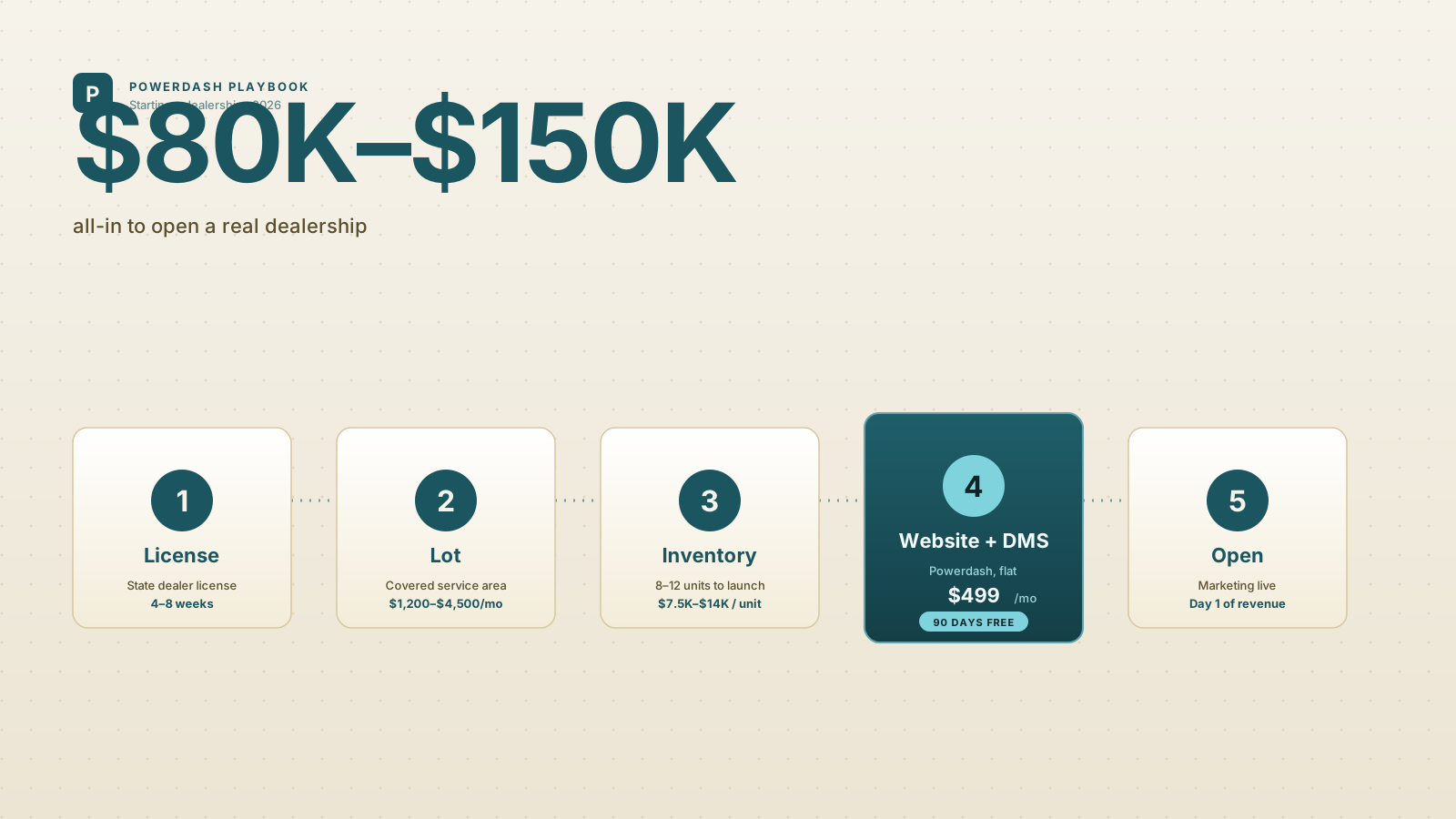
- Inventory (the biggest line). Plan on 8 to 12 carts on the lot to look credible. Wholesale on new from Club Car, EZ-GO, or Yamaha runs $7,500 to $14,000 per unit. Used carts you can pick up at auction for $2,000 to $5,000. Lifted/custom builds go higher.
- Lot or building. $1,200 to $4,500 a month for a usable storefront in most secondary markets. You don't need a glass showroom. You need a covered area for service and a fenced lot.
- Licensing and insurance. State dealer license (varies wildly, $300 to $1,500 plus bond), business liability ($800 to $2,000/yr), commercial auto if you do delivery, garage-keepers if you do service.
- Website and DMS. You can DIY for under a hundred a month or you can pay an incumbent $500+ a month. Most new dealers underestimate how much time the DIY route costs them in year one.
- Marketing budget for year one. $1,500 to $3,000 a month. Google Ads for "golf carts near me" in your county will run you 60% of that. SEO and Facebook handle the rest.
All-in for a small-but-real start: $80,000 to $150,000. If someone tells you they did it for $20K, they probably had a garage and an existing customer base.
Get your dealer license before anything else
Every state has its own rules. Some treat golf carts as motor vehicles (you need a full motor vehicle dealer license, bond, the works). Others classify low-speed vehicles separately. A handful (Florida, Arizona, Texas) have specific LSV or NEV dealer categories.
Call your state's Department of Motor Vehicles or licensing board before you incorporate. The license usually takes 4 to 8 weeks. Don't sign a lease until you know what zoning your state requires for a licensed dealer location.
Where dealers actually source inventory
Three paths, depending on how new you are:
- Manufacturer authorized dealership. Club Car, EZ-GO, Yamaha. These are the most lucrative but they want exclusivity in your territory and a real showroom. Hard to get if you're brand new without a track record.
- Wholesale from secondary manufacturers. ICON, Evolution, Star EV, Bintelli, Tomberlin, Atlas. These are easier to onboard with and have great margins. Many new dealers start here.
- Buy used at auction or trade-in. Manheim, IAA, local auctions. Margins are higher but you take inventory risk and need a mechanic on staff.
The two things new dealers underspend on
After everything we've heard, two areas always come up. Skimp here and year one is harder than it needs to be.
1. The website
Most new dealers think they'll just throw up a WordPress site and call it done. Six months later they're losing leads because their site doesn't show up on Google for "golf carts in [their town]." A dealer site needs real inventory pages, schema markup, fast loads, and a lead capture form that actually works on a phone. If you DIY, budget the time. We also have a 2026 breakdown of every major golf cart dealer software if you want the full landscape before deciding.
(Yes, we make Powerdash. We also tell people to use whatever ranks. We just see a lot of WordPress dealer sites that don't rank.)
2. CRM and lead pipeline
New dealers track leads in their head, then in a notebook, then in a spreadsheet. By the time they realize they need a CRM they've lost track of 30 conversations. Pick something on day one. Even a free Trello board beats nothing. A real CRM with email automation is better.
Rentals as a revenue stream most new dealers ignore
If you're near a beach town, a golf community, or a resort, rentals can double your revenue. A new cart that costs $9,000 wholesale can rent for $200 a day. Twenty-five rental days a month and you've paid for the cart in 18 months, while still owning the asset to resell.
The hard part: managing the calendar, deposits, inspections, and turnover. Most new dealers underestimate this and end up running rentals out of a spreadsheet for too long. Pick a tool that handles rentals natively.
The 90-day milestone
If 90 days in you don't have these four things in place, slow down and fix them before scaling:
- A website that shows up on Google for at least one "golf cart" query in your county.
- A CRM with at least 30 contacts in it and follow-up scheduled for each.
- Inventory turning at least once a quarter. Stale inventory is dead capital.
- One repeat-business channel. Rentals, fleet service, parts. Something beyond one-time sales.
Who is Powerdash, and why are we writing this
We build dealer management software for golf cart shops. New dealers and 30-year shops use us to run the website, inventory, leads, rentals, and parts shop in one place. If you're starting up, we have a 60-day free trial. No card. We'll also give you migration help if you eventually want to move off whatever you start with.
Either way: the industry needs more good dealers. Email us if you want a hand. hello@powerdash.io.