7 Digital Marketing Trends Every Golf Cart Dealership Should Know in 2026
The digital shifts driving golf cart sales in 2026, and how your dealership can turn them into more leads on the lot.
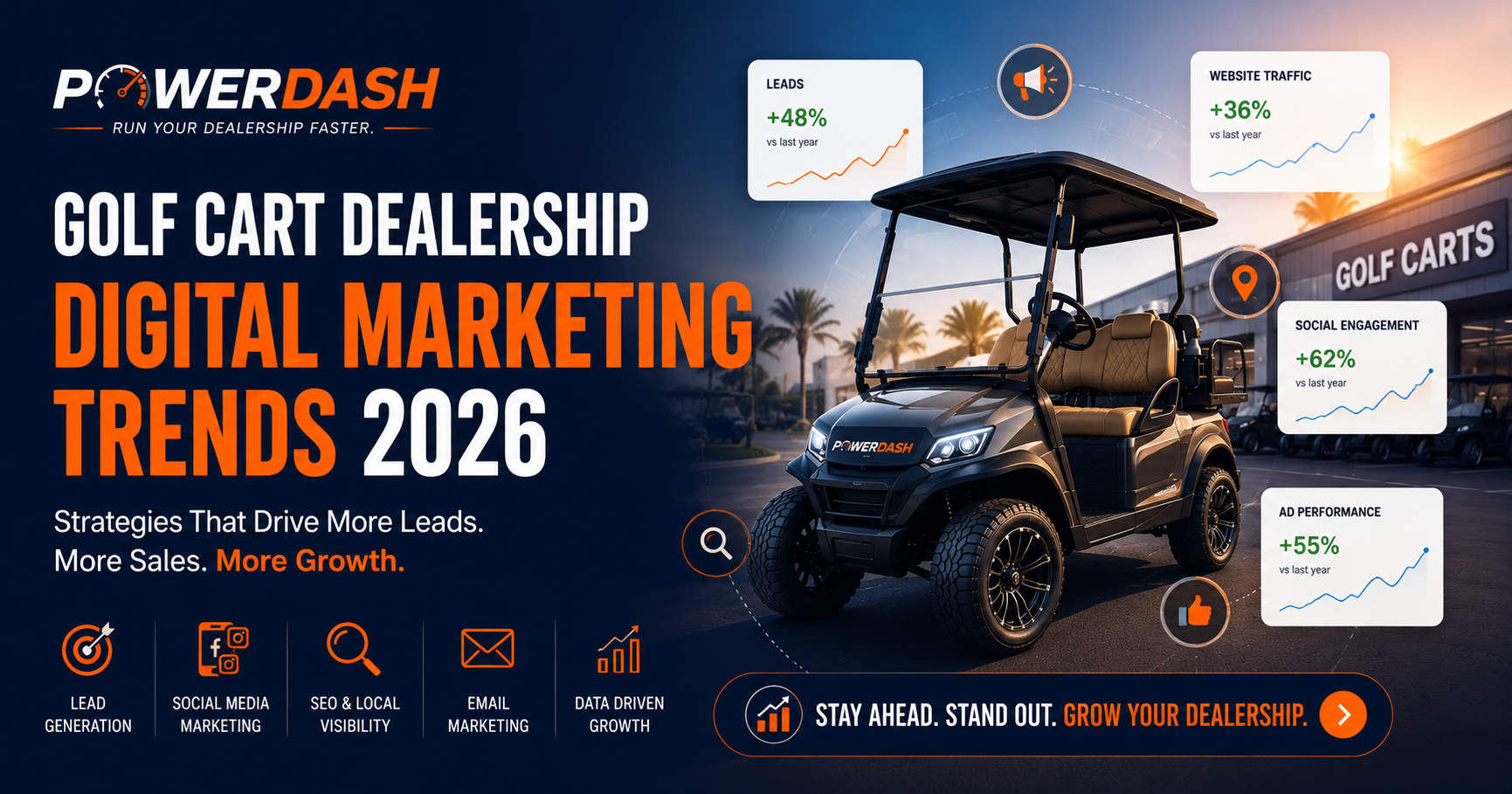
Buying a golf cart isn't what it used to be. Your customer researches on their phone, watches a few videos, reads your reviews, and often asks an AI assistant a question or two before they ever pick up the phone. Across the dealer websites we help run, the pattern is consistent: the dealers who win are the ones who show up early in that research and make the next step obvious. If your marketing still relies on a static website and the occasional Facebook post, you're quietly losing sales you never even see. Below are seven trends shaping how golf cart dealers grow in 2026, with a practical move for each one.
1. Local SEO and your Google Business Profile are the new front door
Most cart buyers search something like "golf carts near me" or "[brand] dealer [your city]." That means winning the Google map pack now matters more than ranking your homepage. Keep your Google Business Profile complete and active. Post accurate hours, your service area, and weekly photos of new arrivals, and answer questions quickly. Google's own Business Profile guidance is clear that complete, regularly updated profiles tend to perform better, so treat it like a living storefront rather than a set-and-forget listing. Share inventory and financing offers as profile updates, and keep your name, address, and phone number identical everywhere they appear online.
2. Short-form video sells the lifestyle, not the spec sheet
A golf cart is an emotional purchase, and nothing captures that like video. Short clips of walk-arounds, custom builds, lift kits, and lighting consistently beat static photos on Reels, TikTok, and YouTube Shorts. The clips that work best are simple: one cart, one feature, one clear reason to want it. Keep them under 30 seconds, shoot vertical, and show the cart in real life on the course, around the neighborhood, or at the tailgate. End every clip with a single next step like "DM us to reserve," and pin your best-performing video to the top of each profile.
3. Optimize for AI answer engines, not just Google
Buyers are increasingly asking ChatGPT, Gemini, and Perplexity things like "best street-legal golf cart dealer in Indianapolis." To show up in those answers, structure your content so an AI can quote it. Write clear FAQ pages, plain-language buying guides, and honest model comparisons, then add schema markup so search engines understand them. Google's structured data documentation covers the Article, FAQ, and Product types worth adding. Dealers who publish genuinely helpful content get pulled into AI answers, and that traffic tends to arrive ready to buy.
4. Reviews and reputation compound over time
Star ratings and recent reviews are two of the strongest signals for both local ranking and buyer trust. Build a simple habit around them. Text every buyer a review link the day after delivery, and reply to every review you get, especially the critical ones. A short, genuine reply to a one-star review often reassures the next shopper more than the review itself worries them. A steady stream of recent, specific reviews will always beat a big pile of old ones.
5. Your website is your hardest-working salesperson
Speed and mobile experience are no longer optional. A slow, clunky site quietly kills leads before a customer ever calls. The dealers converting best in 2026 run a fast, inventory-driven website where every cart has real photos, financing pre-qualification, and an easy way to check availability or start the deal online. That's exactly what Powerdash was built for, so your phone number, financing offer, and live inventory stay front and center on every screen. If a shopper can go from a video to a specific cart's page to a financing application in a few taps, you've removed most of the reasons they'd stall. See what's included.
6. First-party data: email and SMS drive repeat and seasonal sales
With third-party tracking fading, your own list is the most valuable marketing asset you have. Capture leads with financing pre-quals, trade-in valuations, and "notify me" alerts on out-of-stock models. Then stay in touch with seasonal promotions, service reminders, and financing follow-ups. Text messages in particular tend to get opened far more often than email, which makes them well suited to time-sensitive offers like a weekend sale or a new shipment landing on the lot.
7. Local paid social and retargeting stretch every dollar
You don't need a big budget to compete. You need sharp targeting. Geo-targeted Facebook and Instagram ads aimed at your service radius, paired with retargeting for anyone who viewed a cart on your site, deliver the best return for most dealers. Combine a strong short-form video with a clear hook like "0% for 12 months" or a trade-in bonus, point the ad at the exact cart it features, and let the platform do the rest. Small, consistent spend usually beats occasional big campaigns.
The bottom line
The dealers growing in 2026 aren't doing all seven of these perfectly. They're doing the fundamentals consistently: a strong local presence, real video, a fast inventory-driven website, and a reliable system for reviews and follow-up. Pick two to tighten up this quarter, get them working, then build from there. For more playbooks like this one, browse the rest of our dealer marketing blog.
Frequently asked questions
How much should a golf cart dealership spend on digital marketing?
Most independent dealers do better with a small, consistent monthly budget than with large one-off pushes. A practical approach is to split a modest amount between local paid social and boosting your best short-form video, then reinvest in whatever produces the most leads. Consistency matters more than size.
What is the fastest way to get more golf cart leads online?
Two moves usually produce results quickest: fully optimizing your Google Business Profile so you appear in local searches, and putting a clear financing or availability call to action on a fast, mobile-friendly website. Both can be improved this week without a big budget.
Do golf cart dealers really need short-form video?
Yes. A golf cart is a visual, lifestyle purchase, and short vertical clips of real carts consistently outperform static photos. You don't need a production crew, just a phone and a few thirty-second walk-arounds posted regularly.
How do I get my dealership to show up in Google's map pack?
Keep your Google Business Profile complete and active, gather recent reviews, add fresh photos often, and make sure your name, address, and phone number are identical across the web. Proximity, relevance, and prominence are what drive map pack ranking.
How often should a golf cart dealership publish content?
A steady, sustainable cadence beats occasional bursts. Even one useful post or buying guide a month, plus regular short videos and profile updates, signals to both search engines and buyers that you're active and trustworthy.
What is answer engine optimization for dealers?
Answer engine optimization is structuring your content so AI assistants like ChatGPT and Google's AI answers can quote it. Clear FAQ pages, plain-language buying guides, and honest model comparisons make your dealership the source those tools cite.
Powerdash gives golf cart dealers everything above in one place: a fast, inventory-driven website, online financing and checkout, review and lead tools, and a built-in blog. Start a free trial or compare plans.